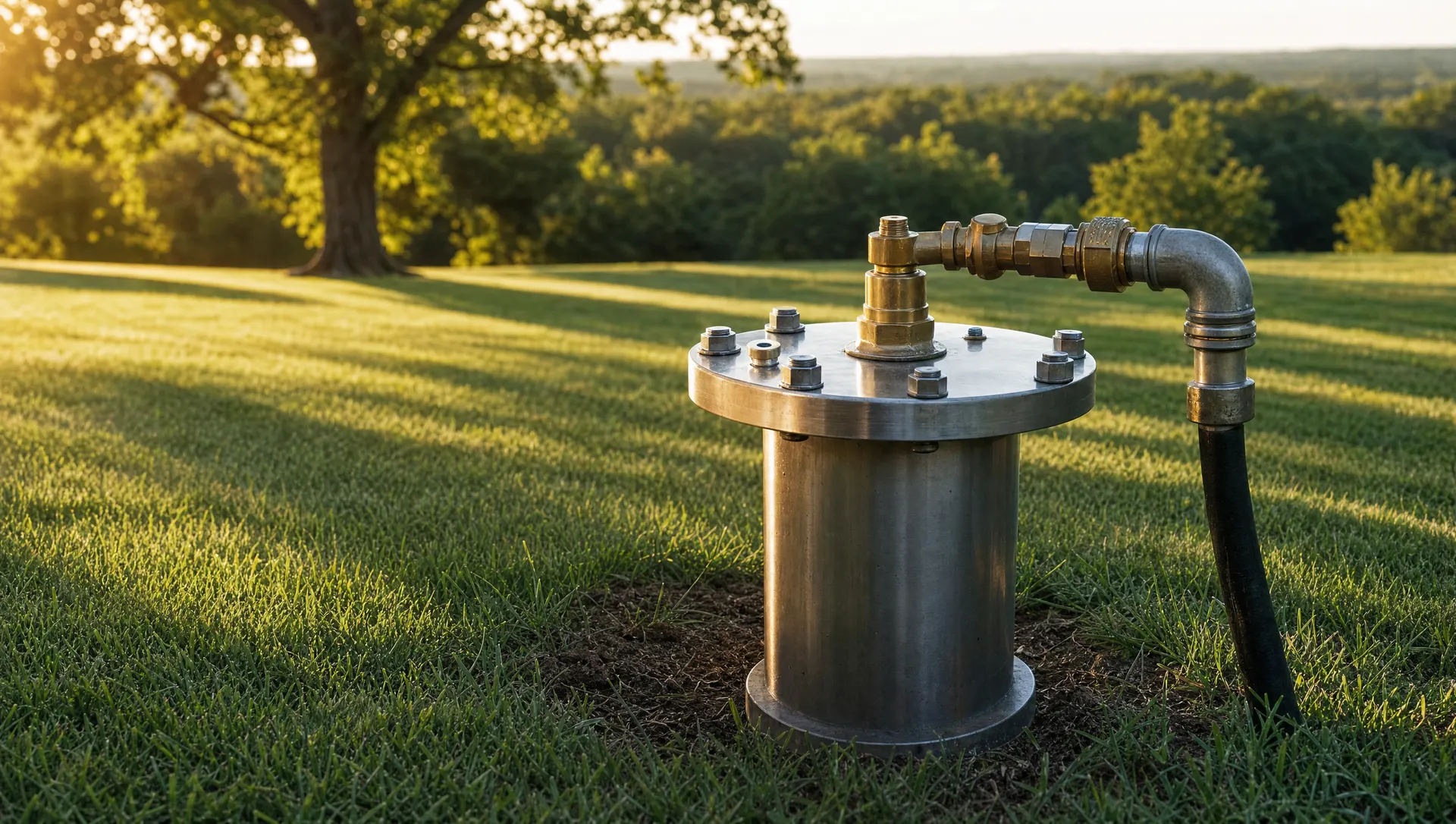
Well Pump Repair in Cape Girardeau, Missouri
The pump kicks on, runs for a few seconds, and shuts back off. Or it hums without moving water. Or the pressure gauge holds steady at zero no matter how long you wait. Well pump problems show up as symptoms at the faucet, but the actual cause is usually somewhere in a chain of parts between the wellhead and your plumbing — and figuring out which link broke is most of the job.
What Well Pump Repair Covers
Repair work on a well pump system usually means one or more of the following:
- Diagnosing the actual fault — testing electrical draw at the pump, checking the pressure switch, checking tank pre-charge, and confirming the well itself still has water at a normal level before assuming the pump is bad
- Pressure switch replacement — a common point of failure that can look exactly like a dead pump
- Wiring and electrical repair — bad splices, corroded connections in the well seal, or a failing control box on three-wire submersible setups
- Check valve replacement — a stuck or failed check valve causes the pump to lose prime or short-cycle
- Pulling and repairing or replacing the pump — when the motor, impeller, or seals have actually failed
Not every call ends in a pump replacement. A large share of "my pump is dead" calls turn out to be the switch, a valve, or a wiring problem — parts that cost a fraction of a new pump.
A repair visit typically starts with the questions you've already answered when you called — what the pump is doing, what changed, how old the system is — followed by direct checks at the pressure switch, the tank, and the electrical supply to the pump. That sequence usually narrows the cause down before any parts come off the truck, which keeps a repair visit from turning into a guessing game billed by the hour.
The Local Angle: What Fails and Why, Around Cape Girardeau County
Well systems around here run into a specific set of problems more than others. Older wells throughout the county still run pumps and switches original to the system, well past the point where a failure should be a surprise. Iron-heavy water, common across this part of southeast Missouri, accelerates wear on check valves and can foul pressure switches over time. Lightning is a real factor too — a close strike during a summer storm can take out a pump's control box or motor winding without leaving any obvious external damage, which is why a pump that worked fine before a storm and won't run after one gets checked electrically first.
Rural properties on well systems that also serve a barn, shop, or second building add another layer — a repair sometimes means tracing a problem through a longer and more complicated pipe and wire run than a simple house-only setup.
Sudden Failure vs. Gradual Decline
Not all pump problems arrive the same way. Electrical failures — a burned winding, a failed capacitor, a wire that finally corrodes through — tend to happen suddenly: the pump worked yesterday and doesn't today. Mechanical wear is usually the opposite. A worn impeller or a pump nearing the end of its service life often shows up first as slowly declining pressure or flow over weeks or months before it quits altogether. Knowing which pattern you're seeing helps narrow down the cause before we even arrive — a sudden stop points toward electrical or the switch, while a slow fade points toward wear, mineral buildup, or a well that's struggling to keep up.
When to Call for Well Pump Repair
Call as soon as you notice a real change, not just an odd one-time blip:
- No water at all, or the pump won't start
- Pump runs constantly and never satisfies the pressure switch
- Pressure that used to be steady is now surging or fading
- A banging, grinding, or new noise from the pump or pressure tank
- The pump short-cycles — turning on and off in rapid succession
- A breaker for the well system trips repeatedly
Waiting on a pump that's struggling usually costs more in the end — a pump straining to run can burn out a motor that a timely repair could have saved.
What Well Pump Repair Costs
Repair costs vary widely because "repair" covers everything from a cheap switch to pulling a submersible pump out of deep casing. Typically, pressure switch and simple electrical repairs sit at the low end of the range, check valve work and control box replacement sit in the middle, and pulling a pump for inspection or resealing costs more because of the labor involved in bringing it up and setting it back down — separate from any parts. Well depth, pump type, and how accessible the wellhead is all factor into the final number, which is why we diagnose first and quote based on what we actually find.
How do I know if it's the pump or something else?
Start with what the pump is doing. Silent and not running at all often points to power, the switch, or wiring. Running constantly without building pressure points toward the pump itself, a stuck check valve, or a well that's drawing down. We confirm with electrical and pressure testing rather than guessing from the symptom alone.
Can a well pump be repaired, or does it always need replacing?
Many issues are genuinely repairable — switches, valves, wiring, control boxes, even some pump-level issues depending on what's failed. Replacement becomes the better option when the pump itself has failed internally, in the motor or windings, or when the pump is old enough that another repair isn't a good use of money. We'll tell you which situation you're in.
Is it normal for a well pump to run for a long time before shutting off?
A healthy system cycles — running until the tank reaches its high-pressure cutoff, then resting until usage drops the pressure back down to the low cutoff. A pump that runs continuously without ever satisfying that cycle, or one that short-cycles rapidly, both point to a problem worth checking rather than something to wait out.
Get Your Well Pump Looked At
If your well pump is acting up in any way — not starting, not stopping, losing pressure, or making noise it didn't used to make — tell us what you're seeing and we'll help you figure out what's actually wrong.
Need Help in Cape Girardeau Right Now?
Tell us what you need and we'll get back to you fast with a free, no-pressure quote.